
What is a Kendama:
Kendama is a type of toy that has long been popular in Japan among both children and adults. Today, Kendama is spread all over the world and the scene is growing, not least here in Sweden. Although it may seem simple at first glance, Kendama is an advanced game with thousands of different tricks for players to try to master. It can be played anywhere and by anyone. The game helps you develop your concentration and endurance.
Nowadays, however, this traditional toy is no longer just a pastime, it is a competitive sport with competitions taking place all over the world.
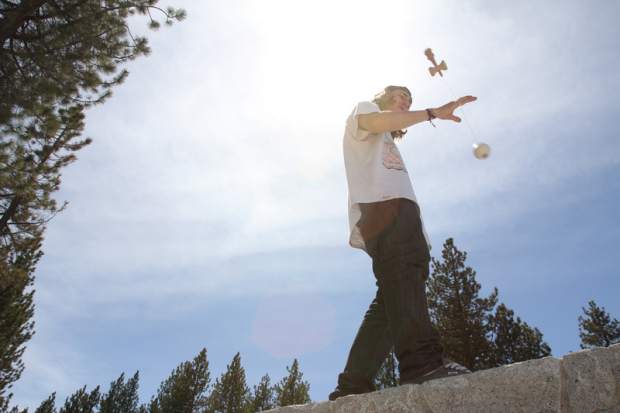
The different parts of the Kendaman:
- Main body ken (剣).

- Spike kensaki (剣先).
- Big cup ōZara (大皿).
- Base cup chūZara (中皿).
- Small cup goat (小皿).
- Ball tame (玉).
- Hole guess (穴).
- Thong ito (糸).
- Cross piece sarado (さらど).
- Small cup edge kozara nofuchi (小皿のふち).
- Big cup edge ōzara nofuchi (大皿のふち).
- Slip-stop or Slip grip
Kendaman are usually made of a turned wooden stick with a pointed point at one end, three cups and a ball with a small hole in it. The cups on either side of the stick are called the big cup and the small cup. The ball is connected to the stick by a string about 40 centimeters long. At the end of the stick is a point with which the player must try to spike the ball. At the other end of the stick is a cup called the base cup.
The game basically involves throwing the ball and trying to catch it in one of the cups or poke it with the tip of the stick. While it may sound simple, there are an almost unlimited number of specific techniques for this.
The grip
Kendama may seem simple, but you'll probably find it quite difficult once you try playing. A superb sense of balance is necessary and it's not just the hands that are important. You also need to use the rest of your body, especially the knees, to follow along with all the movements. Although there are many other grips, players should master these five basic ones first.
The way a Kendama is held is called the grip. Let's examine the five basic grips.
- To perform the “ozara (large cup) grip” use your thumb and index finger to hold the tip of the kendaman pointing downwards and the base cup pointing upwards. Keep your middle and ring fingers on the small cup.
- For the “point grip”, you hold the kendaman so that the base cup is at the bottom and the tip is at the top.
- For the “rosoku (light) grip” this means you should hold the tip pointing downwards and the small cup towards you.
- To perform the “tama (ball) grip,” hold the ball with the hole facing up.
- For the “secret grip” you hold the large cup and the small cup with your fingers, with the rod parallel to the ground.

(Photo: Maruishi Teruki, a member of the board of directors of the Japan Kendama Association)
How to stand
Posture plays an important role in Kendama. There are primarily two postures used: “straight posture” and “angled posture”.
In the straight stance, the stick will be held in the hand and the ball will dangle directly below.
In the angled stance, the ball is held in one hand while the stick is held with the other at a 45-degree angle. In both stances, the feet are held slightly closer together than shoulder-width apart, and a right-handed player places their right foot one step ahead of the left. The reverse is true for a left-handed player.
It is important to keep your center of gravity forward, relax your shoulders, and stand naturally.
No matter what trick is being performed, you should follow a 1, 2, 3 rhythm. First, the knees should be bent. Then, while the trick is being performed, they should be straightened. And finally, they should be bent again when the ball is caught. This rhythm is the key to Kendama.

Know the rules of the game
The basics of kendama play involve pulling the ball upwards so that it is either caught in one of the cups or the hole in the ball lands in the pointed part of the stick. More advanced tricks involve balancing and juggling.
There are eleven prescribed movements on the kendama trick list to achieve a kyu rankings and even more for one day ranking. A 10-kyu rating (the lowest beginner grade) is achieved by simply catching the ball in the largest cup. A book published by the Japan Kendama Association lists 101 different tricks for kendama, but there are probably tens of thousands of variations of different tricks. Different postures and grips are required to perform different tricks. Most people play kendama for fun, but competitions do take place, especially in Japan, where many Kendama shokūgekìs (Japanese for battle) are held. Such competitions involve performing specific tricks in succession. Or performing certain tricks repeatedly for as long as possible. In addition, tricks can be performed head to head, where a rival determines the winner. The first to fail a trick loses.
Types of tricks:
Kendama tricks are divided into fifteen (15) different types:
1. Cup tricks
2. Turtle tricks
3. Pull Up Spike Tricks
4. Airplane tricks
5. Swinging Spike tricks
6. Around tricks
7. Lighthouse tricks
8. Slide/Slip tricks
9. Spin tricks
10. Warbler tricks
11. Mastery tricks
12. Freeze (Still) tricks
13. Air tricks
14. Cat's Cradle tricks
15. Special tricks
TIP
Many kendama players mix and match different kens and tamas. All kendamas weigh slightly differently. Most professionals are very careful about measuring both tama and ken to find the perfect combination. In order to be able to do all kendama tricks, the kendama should be well balanced. A distribution of 71/71 grams per side is good. The total weight of a competition kendama is around 130g – 160grams.
If you want to make sure that the sarado (cups) are in the right place on the ken, you can immediately make a mark on the ken where it is located when you buy it. Most often, the sarado is not glued but can move, then you can glue your sarado. It is not fun when your cups move during play or if they are pressed down too far, which affects the balance. Just put a small dab of glue where the sarado should be and let it dry.
If your cups get dented, use a coin to knead the wood back to its original shape. Press the coin against the cup and follow the curve. Bowl shape is crucial when doing tricks like lighthouses, lunars, etc.
Your Kendama will take a beating and the paint will come off. It is part of the game and nothing unnatural, on the contrary, it is meant to be that way. Most balls are most comfortable to play with after a week of being recorded. The more your tama is used, the better grip it will have.
Having trouble landing a trick? Use more knees, you can't stand still like a stick!
OUR BEST-SELLING KENDAMA


Heartwood Kendama Grunge Volcano Orange
Kendama Original price was: 249 kr.179 krCurrent price is: 179 kr.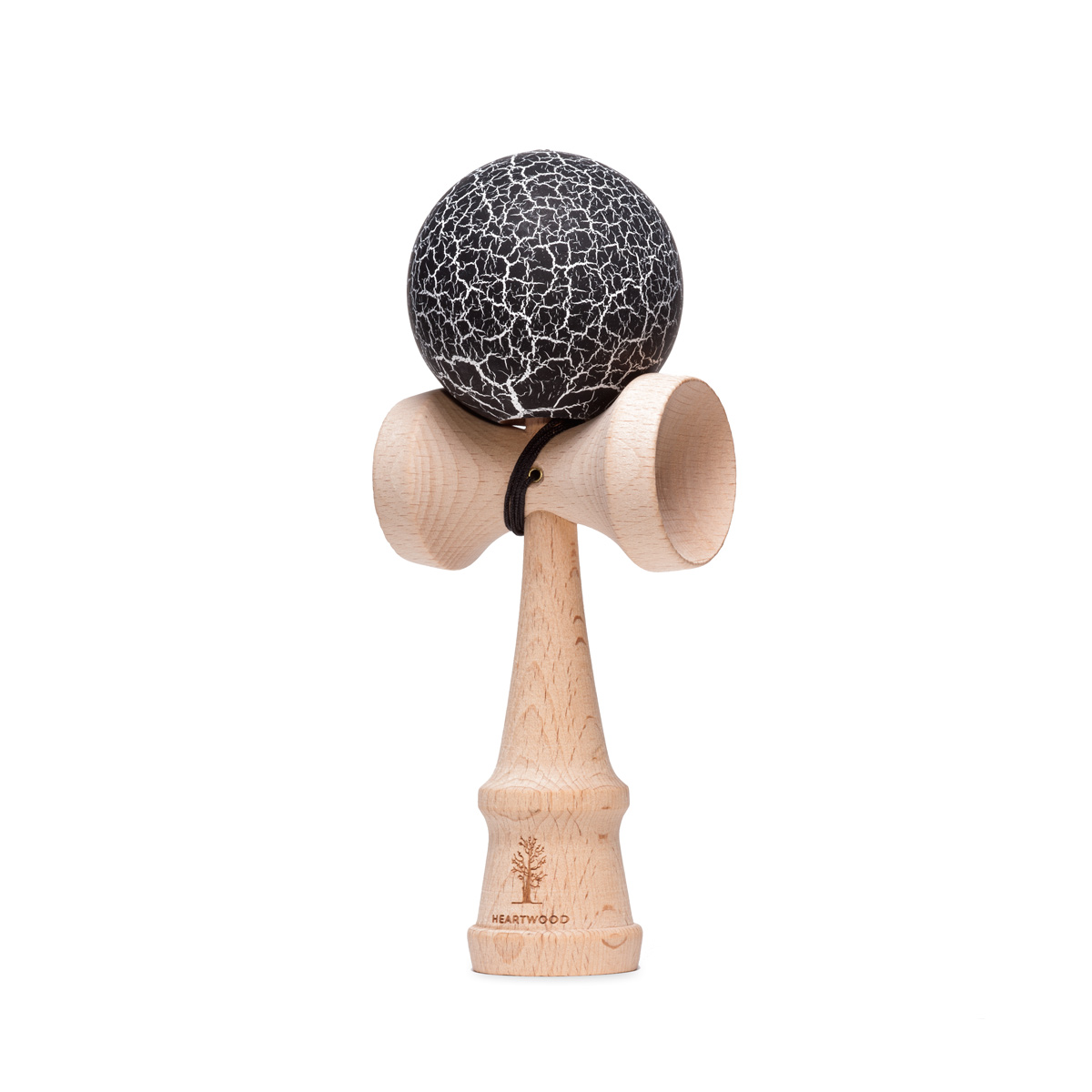
Heartwood Kendama Grunge Charcoal Black
Kendama Original price was: 249 kr.179 krCurrent price is: 179 kr.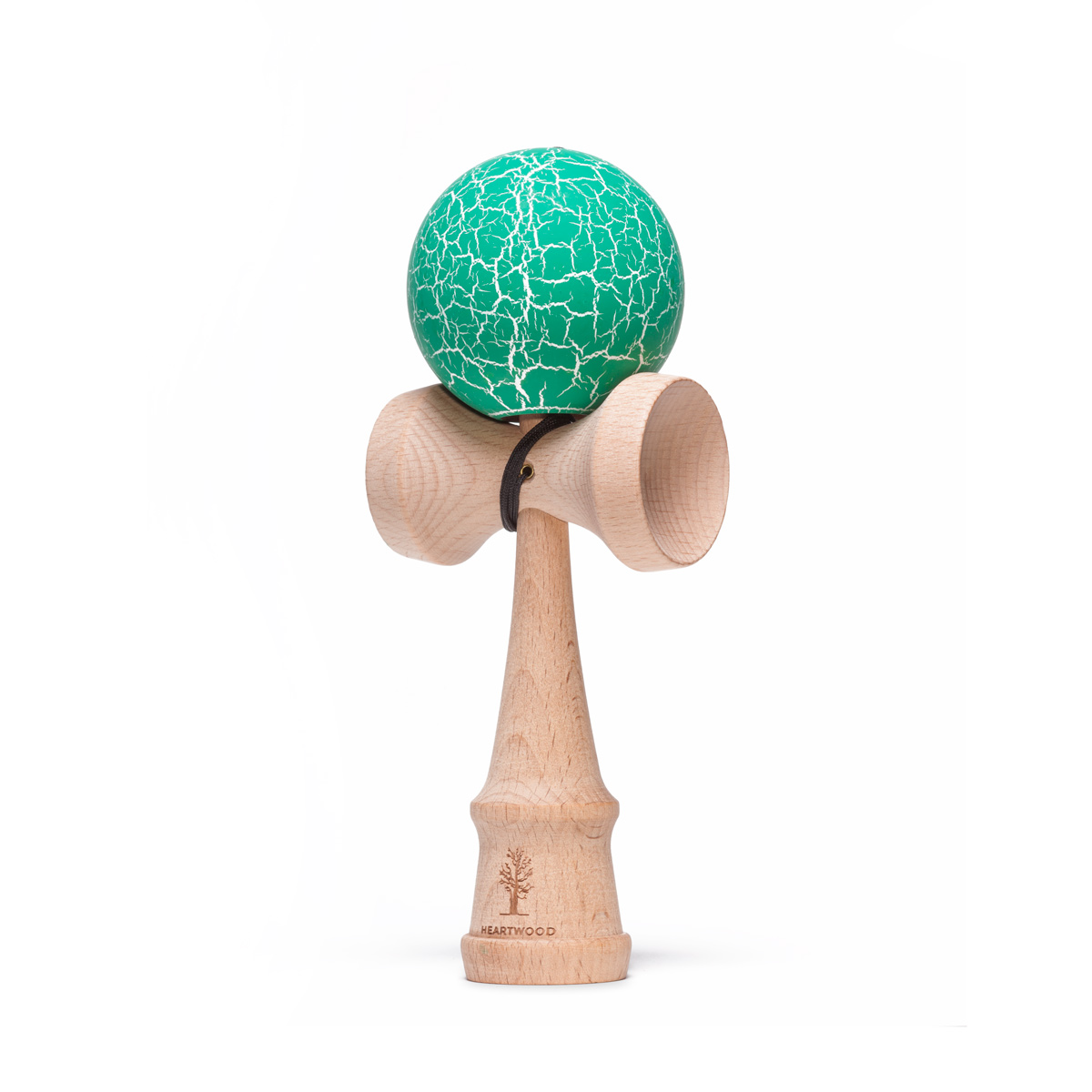
Heartwood Kendama Grunge Lush Green
Kendama Original price was: 249 kr.179 krCurrent price is: 179 kr.
- Big Cup
- Small Cup
- Base Cup
- Candle (hold spike, middle cup)
- Moshikame (alternating big cup, middle cup, 3x) (sara grip)
- Knee Bounce (big cup, knee bounce, big cup)
- Elbow Bounce (big cup, elbow bounce, big cup)
- Moshikame with Handle Tap (3x)
- Small Cup, Middle Cup, Big Cup (and back)
- Pull Spike
- Cup to Spike
- Space Walk
- Hanging Middle Cup (hold string in middle, middle cup)
- Side & Outside Catch
- Airplane (holding ball, swing to spike)
- Small Cup, Middle Cup, Big Cup (and back 3x)
- Hanging Middle Cup (hold string in middle, middle cup)
- Big Cup, Spike
- Swing Up and In (swing ball to spike)
- Drop in (arm extended up, drop to spike)
- Hanging Up and In (hold string in middle, spike)
- Around Japan (small cup, big cup, spike) (big cup, small cup, spike)
- Spike, Big Cup, Spike
- Lighthouse Trade
- The Swirl
- Hand Roll
Last received
-
Sale


Kendama USA – Pro Models – Jake Wiens
KendamaChrome Kendama Autum Kendama - Berlin CamouflageOriginal price was: 369 kr.199 krCurrent price is: 199 kr.Original price was: 369 kr.199 krCurrent price is: 199 kr. -
Sale
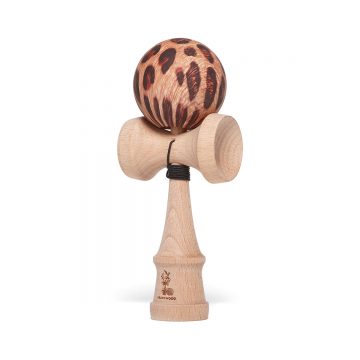

Heartwood Kendama Leopard
KendamaHeartwood Kendama Leopard is a series of Kendamas from Swedish Heartwood. The model is in the original size of 18 cm. Heartwood's kendama series has high precision and a nice finish.Original price was: 249 kr.199 krCurrent price is: 199 kr.Original price was: 249 kr.199 krCurrent price is: 199 kr. -
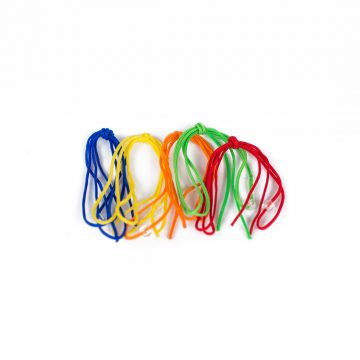

5-pack of extra strings Kendama
Kendama5-pack of extra strings for your kendama. Each string also has its own beads for attachment.19 kr19 kr -
Sold out

Kendama KROM Viking – Mahogany Emerald
KendamaA stately Kendama 21 cm high in Mahogany.Original price was: 399 kr.299 krCurrent price is: 299 kr.Original price was: 399 kr.299 krCurrent price is: 299 kr. -
Sold out

BA – The Kuru V2 Black/Pink – Maple
Kendama, KuruOriginal price was: 139 kr.79 krCurrent price is: 79 kr.Original price was: 139 kr.79 krCurrent price is: 79 kr. -
 59 kr
59 kr


